
Court Marriage in Pakistan: Service Fee, Process & Requirements
Court marriage in Pakistan is a legally recognized method of solemnizing and registering a marriage under Pakistani law. Court marriage in Pakistan allows adult individuals to enter into a lawful marital relationship with full legal protection, official registration, and documentary validity for courts, NADRA records, and immigration purposes.
Unlike traditional marriage ceremonies, court marriage in Pakistan focuses on legal compliance, documentation, and enforceability rather than cultural rituals. This makes court marriage a preferred option for couples seeking privacy, clarity, and a legally secure marriage process in Pakistan.
Court Marriage in Pakistan – Legal Overview
What Is Court Marriage in Pakistan Under Pakistani Law
Court marriage in Pakistan refers to a marriage solemnized and registered through lawful civil and family law procedures. It is not a separate form of marriage but a legal mechanism through which Nikah is documented, registered, and made enforceable under Pakistani law.
Court marriage in Pakistan operates within the framework of:
- Muslim Family Laws Ordinance, 1961
- Provincial marriage registration rules
- Family Courts Act
- Union Council and NADRA CRMS systems
A properly conducted court marriage in Pakistan grants spouses legal marital status, enforceable rights, and officially recognized documentation.
[Internal Link Placeholder: Court Marriage in Karachi]
[Internal Link Placeholder: Court Marriage in Islamabad]
Is Court Marriage Legal in Pakistan?
Legality of Court Marriage in Pakistan Under Family Law
Yes, court marriage in Pakistan is fully legal and constitutionally protected when conducted and registered in accordance with applicable family laws. Pakistani courts have consistently upheld the right of adult individuals to marry by free will.
A legally registered court marriage in Pakistan is recognized for:
- Inheritance and succession matters
- Family court proceedings
- NADRA marital status updates
- Immigration, visa, and embassy documentation
There is no legal restriction on court marriage in Pakistan where statutory requirements are fulfilled.
Eligibility Requirements for Court Marriage in Pakistan
Legal Age, Consent, and Eligibility for Court Marriage in Pakistan
To lawfully contract a court marriage in Pakistan, both individuals must meet defined eligibility conditions prescribed by law.
📌 Eligibility Criteria for Court Marriage in Pakistan
Requirement | Legal Condition |
Minimum Age | 18 years (male & female) |
Consent | Free will, without coercion |
Marital Status | Unmarried / Divorced / Widowed |
Relationship | Not within prohibited degrees |
Legal Capacity | Sound mind |
Marriage below the legal age is unlawful. Court marriage in Pakistan strictly requires voluntary consent, typically recorded through sworn affidavits and formal declarations.
[Internal Link Placeholder: Age for Marriage in Pakistan]
[Internal Link Placeholder: Court Marriage Requirements]
Documents Required for Court Marriage in Pakistan
Mandatory Documents Required for Court Marriage in Pakistan
Accurate documentation is essential for court marriage in Pakistan to ensure lawful registration and future legal enforceability. Incomplete or incorrect documents are the most common cause of delay.
📌 Documents Required for Court Marriage in Pakistan
Document | Purpose |
CNIC / Passport | Identity and age verification |
6 Passport-Size Photographs | Nikah Nama and official records |
Affidavit of Free Will | Proof of voluntary consent |
Marital Status Affidavit | Legal capacity confirmation |
Divorce Decree (if applicable) | Prior marriage dissolution |
Death Certificate (if applicable) | Widow / widower status |
Witness CNIC Copies | Legal validity |
[Internal Link Placeholder: Nikah Nama Requirements]
[Internal Link Placeholder: NADRA Marriage Certificate]
Court Marriage Process in Pakistan
Step-by-Step Court Marriage Process in Pakistan
Court marriage in Pakistan follows a structured legal sequence designed to ensure lawful solemnization and registration under family law.
📌 Court Marriage Process in Pakistan – Legal Steps
Step | Description |
1 | Document verification |
2 | Consent affidavits |
3 | Nikah solemnization |
4 | Nikah Nama completion |
5 | Union Council registration |
6 | Marriage certificate issuance |
The Nikah is solemnized by a licensed Nikah Registrar, followed by official registration. Once completed, court marriage in Pakistan becomes legally enforceable.
[Internal Link Placeholder: Court Marriage Process in Karachi]
[Internal Link Placeholder: Online Court Marriage in Pakistan]
Court Marriage Fees in Pakistan
Court Marriage Service Fee in Pakistan – Cost & Charges
There is no fixed government fee prescribed for court marriage in Pakistan. However, professional service charges are typically involved.
The court marriage fee in Pakistan generally ranges between PKR 20,000 to PKR 40,000, depending on:
- City and jurisdiction
- Documentation complexity
- Same-day or scheduled processing
The service fee usually includes:
- Legal drafting and affidavits
- Nikah Registrar charges
- Registration handling
Court marriage in Pakistan remains a cost-effective and legally secure alternative to traditional marriage ceremonies.
[Internal Link Placeholder: Low Court Marriage Fee in Karachi]
[Internal Link Placeholder: Court Marriage Fee in Islamabad]
Role of Nikah Registrar in Court Marriage in Pakistan
Legal Authority and Responsibilities of the Nikah Registrar
In court marriage in Pakistan, the Nikah Registrar plays a central legal role in the solemnization and documentation of marriage. A licensed Nikah Registrar is authorized under provincial marriage laws to conduct Nikah, record marital particulars, and ensure lawful registration with the Union Council.
During court marriage in Pakistan, the Nikah Registrar is responsible for:
- Verifying the identities of bride and groom
- Confirming free will and consent
- Conducting Nikah in accordance with Islamic principles
- Completing and signing the Nikah Nama
- Forwarding records for official registration
A court marriage in Pakistan is considered incomplete if the Nikah is not solemnized or recorded by a legally authorized registrar.
Union Council Registration After Court Marriage in Pakistan
Civil Registration and Official Record Creation
After solemnization, court marriage in Pakistan must be registered with the relevant Union Council to acquire civil validity. Union Council registration transforms the private Nikah into a state-recognized marital record.
Union Council registration ensures that:
- Marriage is legally recorded under Pakistani law
- Certified copies of Nikah Nama are issued
- Marriage becomes admissible in courts and government departments
Failure to register a court marriage in Pakistan may result in documentation complications, especially in inheritance, immigration, or family law matters.
[Internal Link Placeholder: Marriage Registration Certificate]
[Internal Link Placeholder: Union Council Marriage Registration]
NADRA Registration After Court Marriage in Pakistan
CRMS Upload and Marital Status Update
Following Union Council registration, court marriage in Pakistan may be uploaded into NADRA’s Computerized Registration Management System (CRMS). This step is essential for couples who require computerized marital records.
NADRA registration after court marriage in Pakistan enables:
- CNIC marital status update
- Family Registration Certificate (FRC) issuance
- Embassy and immigration use
- Official verification across government institutions
While NADRA registration is not the act of marriage itself, it serves as national-level confirmation of a legally registered marriage.
[Internal Link Placeholder: NADRA Marriage Certificate]
[Internal Link Placeholder: NADRA Family Registration Certificate]
Court Marriage for Overseas Pakistanis
Online and Remote Court Marriage in Pakistan
Court marriage in Pakistan is lawfully available for overseas Pakistanis through structured legal facilitation. Where one or both parties are abroad, marriage may be solemnized through online or proxy mechanisms, subject to legal requirements.
For overseas court marriage in Pakistan:
- Identity verification is completed through passports or NICOP
- Consent may be recorded through video or power of attorney
- Nikah is solemnized by a licensed Nikah Registrar
- Registration is completed through Union Council and NADRA
This mechanism allows overseas Pakistanis to complete court marriage in Pakistan without physical presence, while retaining full legal validity.
[Internal Link Placeholder: Online Court Marriage for Overseas Pakistanis]
[Internal Link Placeholder: Online Nikah in Pakistan]
Legal Rights After Court Marriage in Pakistan
Spousal Rights and Legal Protection
A legally registered court marriage in Pakistan grants both spouses enforceable rights under Pakistani family law. These rights exist irrespective of whether the marriage was traditional or court-based.
Legal rights arising from court marriage in Pakistan include:
- Inheritance and succession rights
- Maintenance and financial support claims
- Legitimacy of children
- Family court jurisdiction for disputes
- Legal protection against unlawful interference
Court marriage in Pakistan provides judicial enforceability, ensuring that marital rights are protected through courts if disputes arise.
Privacy and Confidentiality in Court Marriage in Pakistan
Discreet and Lawful Marriage Option
One of the primary reasons couples opt for court marriage in Pakistan is privacy. Court marriage allows individuals to solemnize their union discreetly, without public ceremonies or social pressure.
Confidentiality in court marriage in Pakistan includes:
- Limited disclosure of personal information
- Controlled documentation handling
- Legal protection against harassment
This makes court marriage a preferred option for couples prioritizing personal safety, dignity, and lawful privacy.
Common Legal Issues in Court Marriage in Pakistan
Mistakes That Cause Delays or Complications
Despite being straightforward, court marriage in Pakistan can face delays due to avoidable mistakes.
Common issues include:
- Incorrect CNIC details or spellings
- Incomplete affidavits
- Failure to register with Union Council
- Delay in NADRA updates
Proper legal handling and document verification help prevent these issues and ensure that court marriage in Pakistan remains legally sound and future-proof.
Marriage Registration After Court Marriage in Pakistan
Why Registration Is Mandatory After Court Marriage
Court marriage in Pakistan does not end with Nikah solemnization. Legal registration is the step that converts a personal union into a state-recognized marital status. Without proper registration, the marriage remains vulnerable in matters of law, documentation, and future enforcement.
Once the Nikah is solemnized, the Nikah Nama must be registered with the relevant Union Council. This registration enables the marriage to be officially recognized for NADRA records, inheritance matters, immigration cases, and family court proceedings.
Nikah Nama Registration and Legal Record Creation
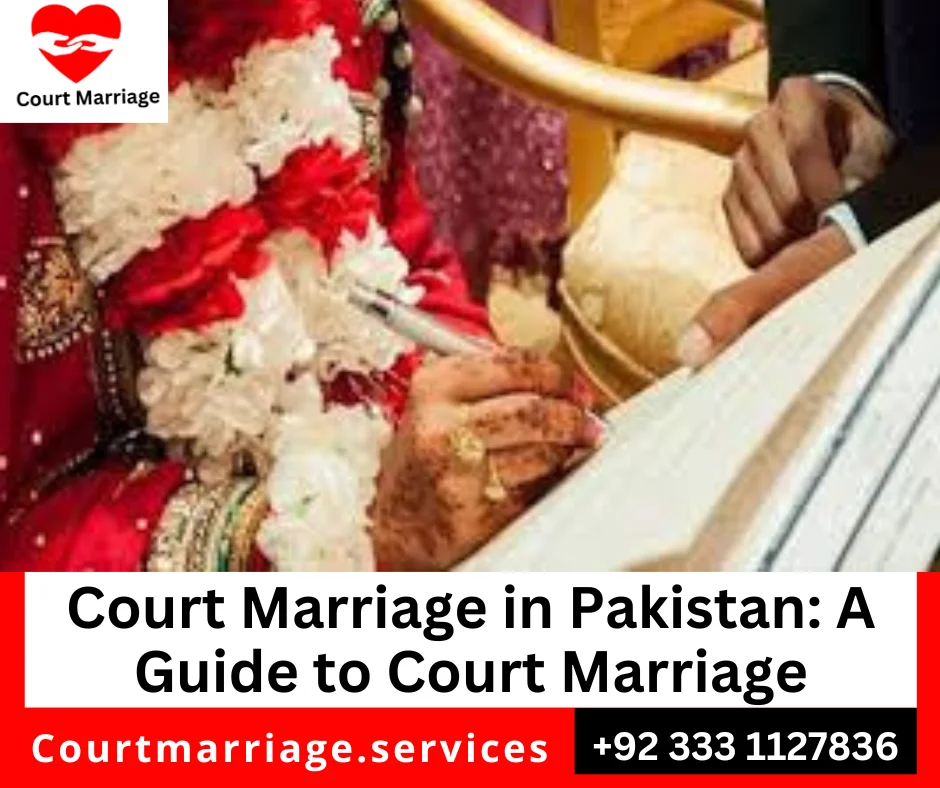
The Nikah Nama serves as the primary legal marriage contract in Pakistan. After court marriage, this document is:
- Signed by bride, groom, witnesses, and Nikah Khawan
- Registered with the Union Council
- Issued in certified copies for legal use
A properly registered Nikah Nama is admissible in courts and government departments as proof of marriage.

Legal Rights After Court Marriage in Pakistan
Civil and Family Law Rights of Married Couples
A legally registered court marriage in Pakistan creates enforceable rights and obligations under Pakistani family law. These rights apply equally to both spouses and are recognized nationwide.
Key legal rights include:
- Right to inheritance and succession
- Right to maintenance and spousal support
- Right to family registration with NADRA
- Right to file or defend proceedings in family courts
- Legal recognition for immigration and visa matters
Without registration, these rights become difficult to enforce.
Court Marriage and NADRA Records
After registration, married couples may update their marital status with NADRA through the Union Council. This enables:
- Family Registration Certificate (FRC) issuance
- CNIC marital status update
- Embassy and immigration verification
Official recognition across government systems
Common Misconceptions About Court Marriage in Pakistan
Is Court Marriage Illegal in Pakistan?
Court marriage is fully legal in Pakistan when conducted and registered under applicable family laws. Misconceptions often arise due to social narratives rather than legal reality.
Court marriages are recognized by:
- Family Courts
- Union Councils
- NADRA
- Immigration and embassy authorities
Is Court Marriage Only for Couples Facing Family Opposition?
This is incorrect. Many couples choose court marriage in Pakistan for:
- Privacy
- Simplicity
- Legal clarity
- Cost efficiency
Court marriage is a lawful option for any adult couple meeting legal requirements.
Is Court Marriage More Expensive Than Traditional Marriage?
Court marriage fees in Pakistan are generally far lower than traditional wedding expenses. The process avoids large ceremonial costs and focuses only on legal documentation and registration.
Court Marriage vs Traditional Marriage in Pakistan
Legal Comparison
Aspect | Traditional Marriage | Court Marriage |
Legal Registration | Sometimes delayed | Immediate |
Documentation | Often incomplete | Structured |
Cost | High | Controlled |
Privacy | Low | High |
Legal Enforcement | Varies | Strong |
Court marriage provides clarity, enforceability, and documentation, which traditional ceremonies often lack unless followed by proper registration.
Practical Considerations Before Court Marriage
Accuracy of Documentation
Errors in names, CNIC numbers, dates, or Nikah Nama entries can cause serious legal issues later. Verification before registration is essential.
Witness Preparedness
Witnesses must be legally eligible and carry valid identification. Unprepared witnesses often cause delays in court marriage processing.
Understanding Jurisdiction
Court marriage procedures may vary slightly by province or city, but legal validity remains uniform across Pakistan once registration is completed.
Why Court Marriage in Pakistan Is a Legally Secure Option
Court marriage in Pakistan provides:
- Legal certainty
- Documented consent
- State recognition
- Protection against disputes
- Long-term enforceability
For couples seeking a lawful, private, and efficient marriage process, court marriage remains one of the most secure options available under Pakistani law.
Court Marriage in Pakistan: Service Fee, Process & Requirements
Part 4: FAQs, Compliance Checklist & Practical Use-Cases
Frequently Asked Questions About Court Marriage in Pakistan
Is court marriage legally valid in Pakistan?
Yes. Court marriage in Pakistan is legally valid when solemnized by a licensed Nikah Registrar and registered with the relevant Union Council. Once registered, the marriage is enforceable under Pakistani family law and recognized by courts, NADRA, and government authorities.
What is the minimum legal age for court marriage in Pakistan?
In Islamabad Capital Territory, Punjab, and Sindh, the minimum legal age for court marriage in Pakistan is 18 years for both males and females. Any marriage below this age is illegal and cognizable under applicable law.
Are witnesses required for court marriage in Pakistan?
Yes. For Sunni Nikah, two adult, sane Muslim male witnesses or one male and two female witnesses are religiously required.
For Shia Nikah, witnesses are not religiously required, but Pakistani family law still requires witnesses for legal registration, like any other civil contract.
How long does the court marriage process take in Pakistan?
With complete documents, court marriage in Pakistan is often completed on the same day. Union Council registration and NADRA updates may take additional time depending on local procedures.
Is NADRA registration mandatory after court marriage?
NADRA registration is not the act of marriage itself, but it is essential for:
- CNIC marital status update
- Family Registration Certificate (FRC)
- Immigration and embassy use
Most couples complete NADRA registration after court marriage in Pakistan.
Can overseas Pakistanis perform court marriage in Pakistan?
Yes. Overseas Pakistanis can lawfully complete court marriage in Pakistan through online or proxy arrangements, provided legal documentation, consent verification, and registration requirements are fulfilled.
Is embassy NOC required for court marriage in Pakistan?
No. Embassy NOC is not required for court marriage in Pakistan.
Compliance Checklist for Court Marriage in Pakistan
Before proceeding, ensure the following compliance points are satisfied:
📌 Court Marriage Compliance Checklist
- ✔ Both parties are 18 years or older
- ✔ Free will and consent affidavits prepared
- ✔ Valid CNIC / NICOP / passport available
- ✔ Six passport-size photographs
- ✔ Witnesses arranged with valid CNICs
- ✔ Nikah solemnized by licensed Nikah Registrar
- ✔ Nikah Nama correctly completed
- ✔ Union Council registration completed
- ✔ NADRA CRMS update initiated (if required)
Failure to complete any of these steps may cause legal or administrative complications later.
Practical Use-Cases of Court Marriage in Pakistan
Court Marriage for Overseas Pakistanis
Court marriage in Pakistan is commonly used by overseas Pakistanis who require:
- Embassy-accepted marriage certificates
- Immigration and spouse visa processing
- NADRA family record updates
Online facilitation allows lawful completion without physical presence.
[Internal Link Placeholder: Overseas Court Marriage in Pakistan]
Inter-City Court Marriage in Pakistan
Court marriage is valid nationwide once registered. Couples from different cities or provinces can complete court marriage in one jurisdiction and use the documentation throughout Pakistan.
[Internal Link Placeholder: Court Marriage in Karachi]
[Internal Link Placeholder: Court Marriage in Lahore]
[Internal Link Placeholder: Court Marriage in Islamabad]
Court Marriage for Documentation & Legal Protection
Court marriage in Pakistan is frequently chosen to ensure:
- Protection against forced separation
- Legal recognition of marital status
- Judicial enforceability in family courts
This is particularly relevant in sensitive family or social circumstances.
Why Court Marriage in Pakistan Remains a Preferred Legal Option
Court marriage in Pakistan combines:
- Legal certainty
- Documented consent
- State registration
- Privacy and dignity
- Long-term enforceability
By following lawful procedures and completing proper registration, couples secure a marriage that is recognized, protected, and usable for all official and legal purposes under Pakistani law.